How to Choose Moonstone Jewelry by Its Sheen and Setting
Learn how moonstone’s sheen moves, what to look for in a video, and why the setting matters when choosing a pendant, earrings or a ring.
By Nara Charm · · Updated · 2 min read
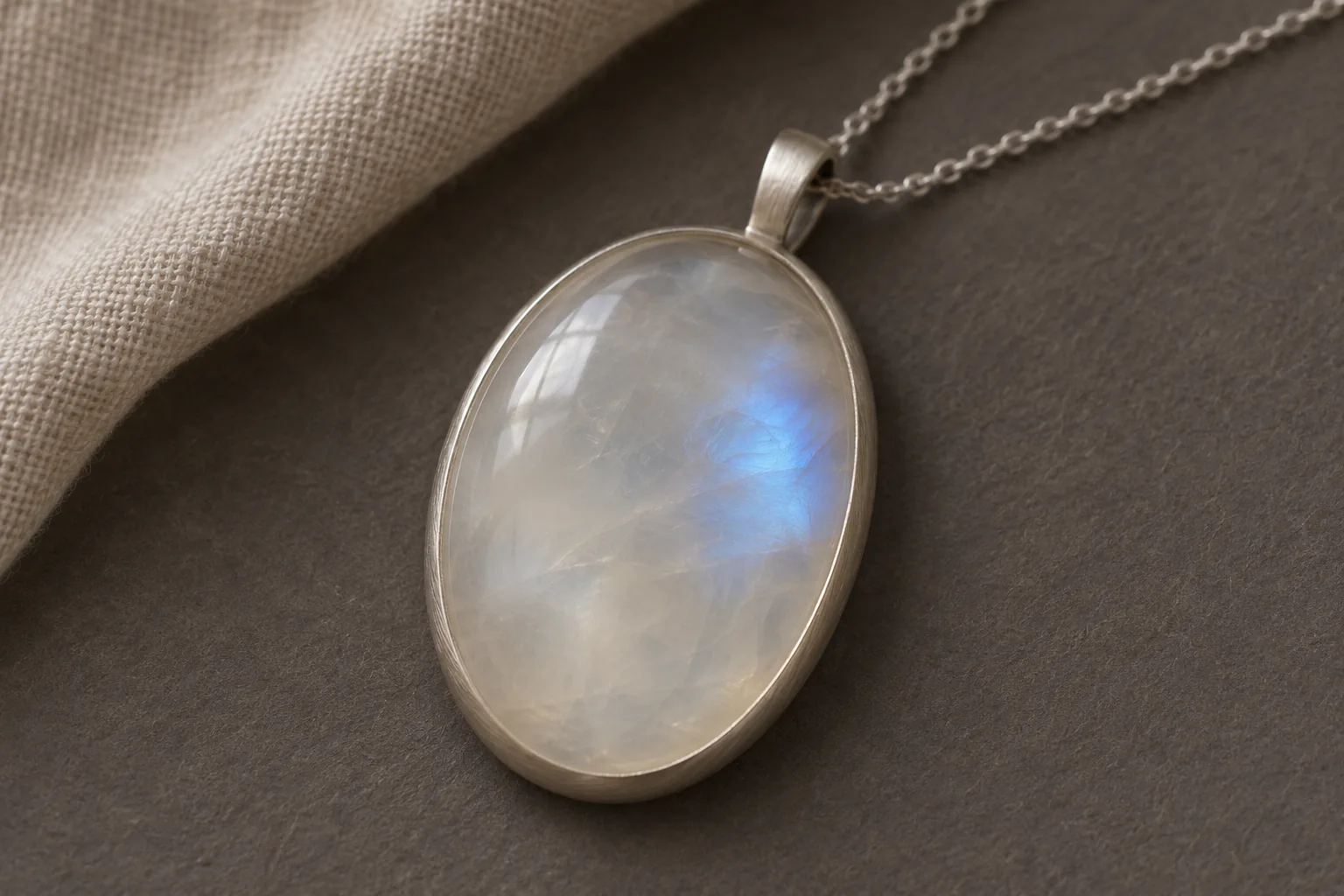
See how far the sheen travels
Moonstone is known for a soft sheen that seems to move under the surface, called adularescence. A single still photo can catch the brightest moment. Ask for a short video with the stone tilted slowly in ordinary light so you can see where the glow travels and when it fades.
For a pendant, look at the moment when the chain hangs as it would on the body. For a pair of earrings, ask to see both fronts moving together. An asymmetrical pair can be a deliberate choice when you know how each stone catches the light.
Read the underlying color and the trade name
The body of a moonstone can look gray, peach or nearly colorless, while its sheen can look white, silver or blue. A rounded cabochon often makes that movement easy to follow. The same form can look quite different over dark and pale clothing.
Some light-colored labradorite is sold as rainbow moonstone. If the mineral identity matters, ask for the mineral name in addition to the trade name, and request the listing or report for the actual piece.
Choose a setting for the way you wear jewelry
Moonstone can break along natural planes when struck. Earrings and pendants take fewer knocks than rings for many wearers. On a ring, look at how high the stone sits and how much of its edge is exposed.
Use the maker’s instructions for cleaning the full piece and avoid steam or ultrasonic cleaning. Store it separately from jewelry that may hit or rub its surface.