The Endless Knot in Tibetan Art and Jewelry Design
Find the endless knot in a documented set of auspicious emblems and distinguish a visible knot motif from an adjustable jewelry closure.
By Nara Charm · · Updated · 2 min read
Look at the knot alongside other emblems
The Smithsonian documents an endless knot as part of a set of eight auspicious emblems. The Rubin Museum also gives an example in a painted context. Looking at a whole object gives you more to work with than an isolated outline.
Trace the crossings in a clear photograph. The repeated turns can make the knot seem to continue around itself. Use the object’s own description for its context and any meaning you want to share.
Find the visible motif and the working closure
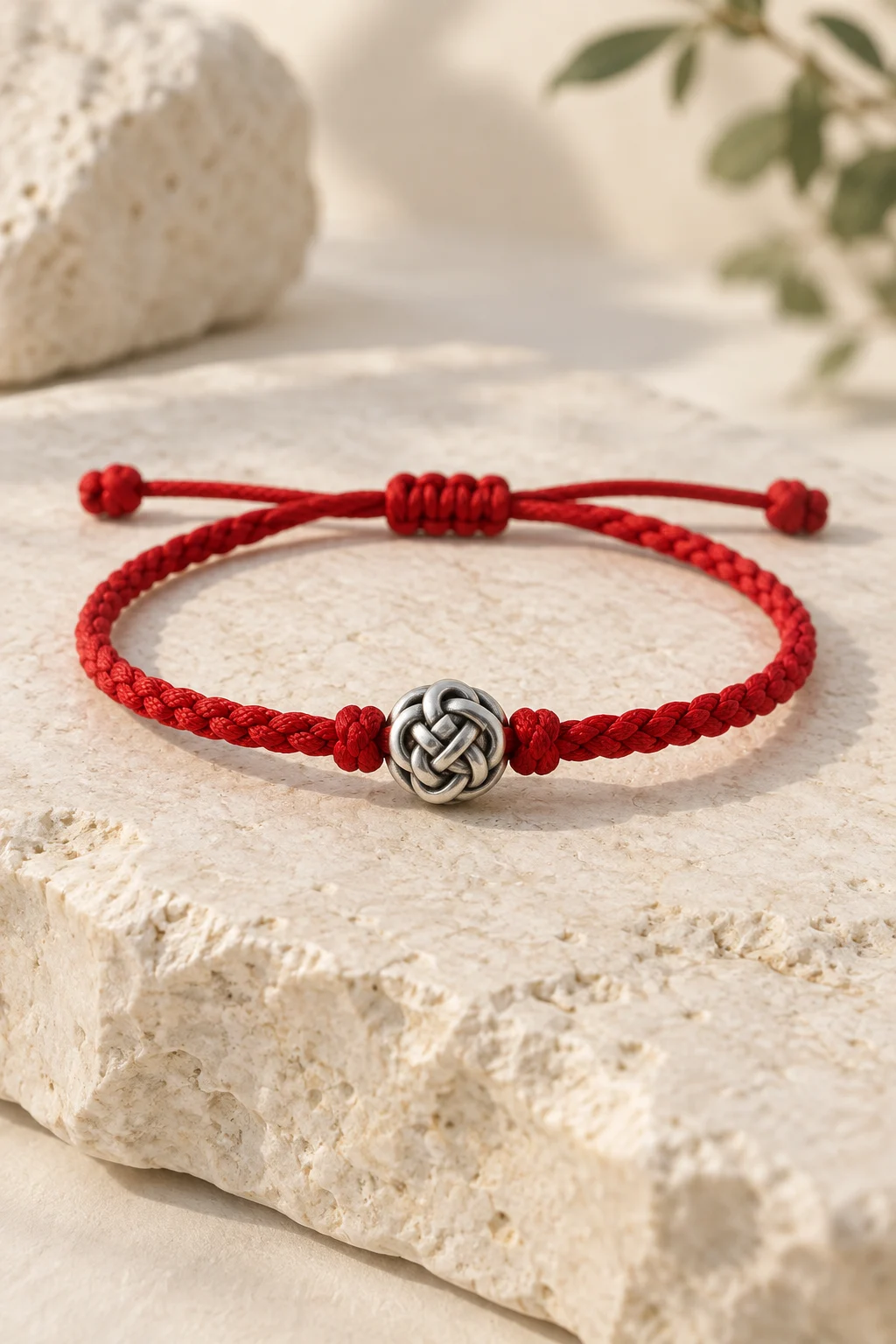
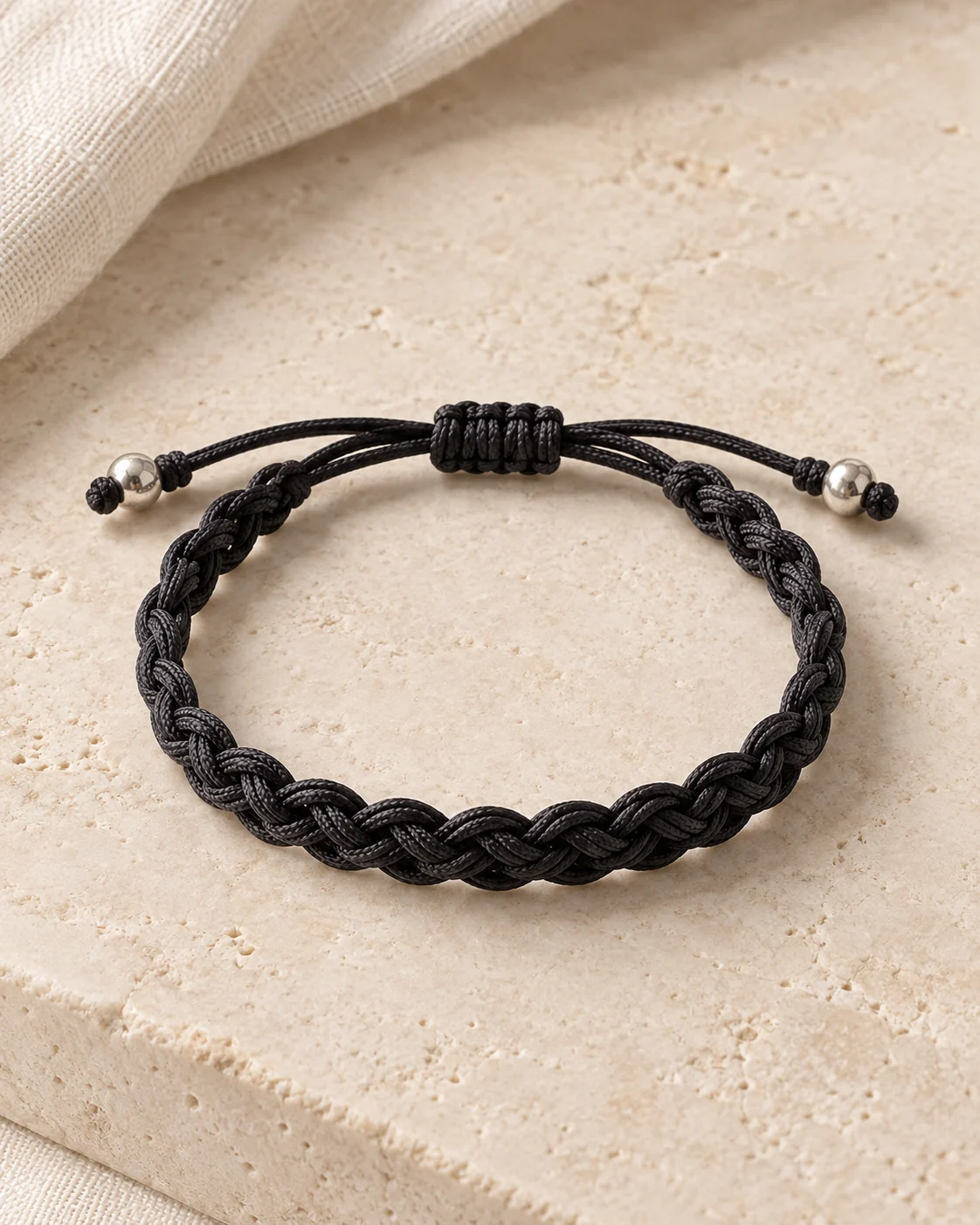
A knot motif may be drawn, formed in metal or braided into a visible detail. A working sliding knot changes the size of a cord loop. Follow both ends and see which part the wearer pulls to change the fit.
On our Hada Knot Red Cord, the knot bead and the adjustable closure are listed separately. Use the piece’s own description for the design reference.
Look at the silhouette from wearing distance
A broad open line reads clearly against plain cloth. A compact pattern may show its crossings best up close. Check the depth of any raised detail if you wear close cuffs.
If the motif marks a personal connection, keep the source or the maker’s description with a gift. The recipient can see the object you had in mind and draw their own connection to it.