Symbolism
Hamsa Hand Meaning: The Ancient Symbol of Protection & Blessing
Discover the meaning of the Hamsa hand — the ancient Middle Eastern and North African symbol of protection, blessing, and divine feminine power. Learn how to wear it.
Symbolism
Discover the meaning of the Hamsa hand — the ancient Middle Eastern and North African symbol of protection, blessing, and divine feminine power. Learn how to wear it.
The Hamsa hand (also called the Hand of Fatima in Islam, the Hand of Miriam in Judaism, and the Hand of God in Christianity) is one of the oldest and most widely used protective symbols in the world. It is shaped like an open right hand — usually with an eye in the center of the palm.
The word "hamsa" comes from the Semitic root *hamesh* or *khamsa*, meaning "five" — representing the five fingers of the hand. The Hamsa has been found in ancient Mesopotamia (modern Iraq), Carthage (modern Tunisia), and across the Middle East and North Africa for over 3,000 years.
In Islam — the Hand of Fatima, named after the daughter of the Prophet Muhammad. It represents patience, faithfulness, and the five pillars of Islam.
In Judaism — the Hand of Miriam, named after Moses's sister. It is a symbol of protection, memory, and the five books of the Torah.
In Christianity — the Hand of God, representing divine protection and blessing.
In Middle Eastern folk tradition — the Hamsa is the most common protection amulet against the evil eye. The open hand says: "No harm can enter here."
Many Hamsa hands feature an eye in the center of the palm. This is where the Hamsa and the evil eye (nazar) traditions overlap. The eye in the palm "stares back" at any jealous or harmful gaze, deflecting it. The combination of the protective hand and the watching eye creates a double layer of protection.
Hamsa hands can face up or down:
Fingers up (most common) — protects against the evil eye and negative energy.
Fingers down — invites blessings, abundance, and good fortune.
Hamsa jewelry often has the fingers facing up for protection — worn facing outward on the body.
Hamsa necklaces are the most popular form — worn at heart level, the hamsa protects the center of your being.
Hamsa bracelets with a small hand charm protect the wrist — the point where your pulse is felt, considered a vulnerable entry point for energy.
Hamsa phone charms bring ancient protection to your most modern device.
In many traditions, a hamsa amulet is most powerful when given as a gift rather than bought for oneself. The protective intention of the giver adds to the amulet's power.
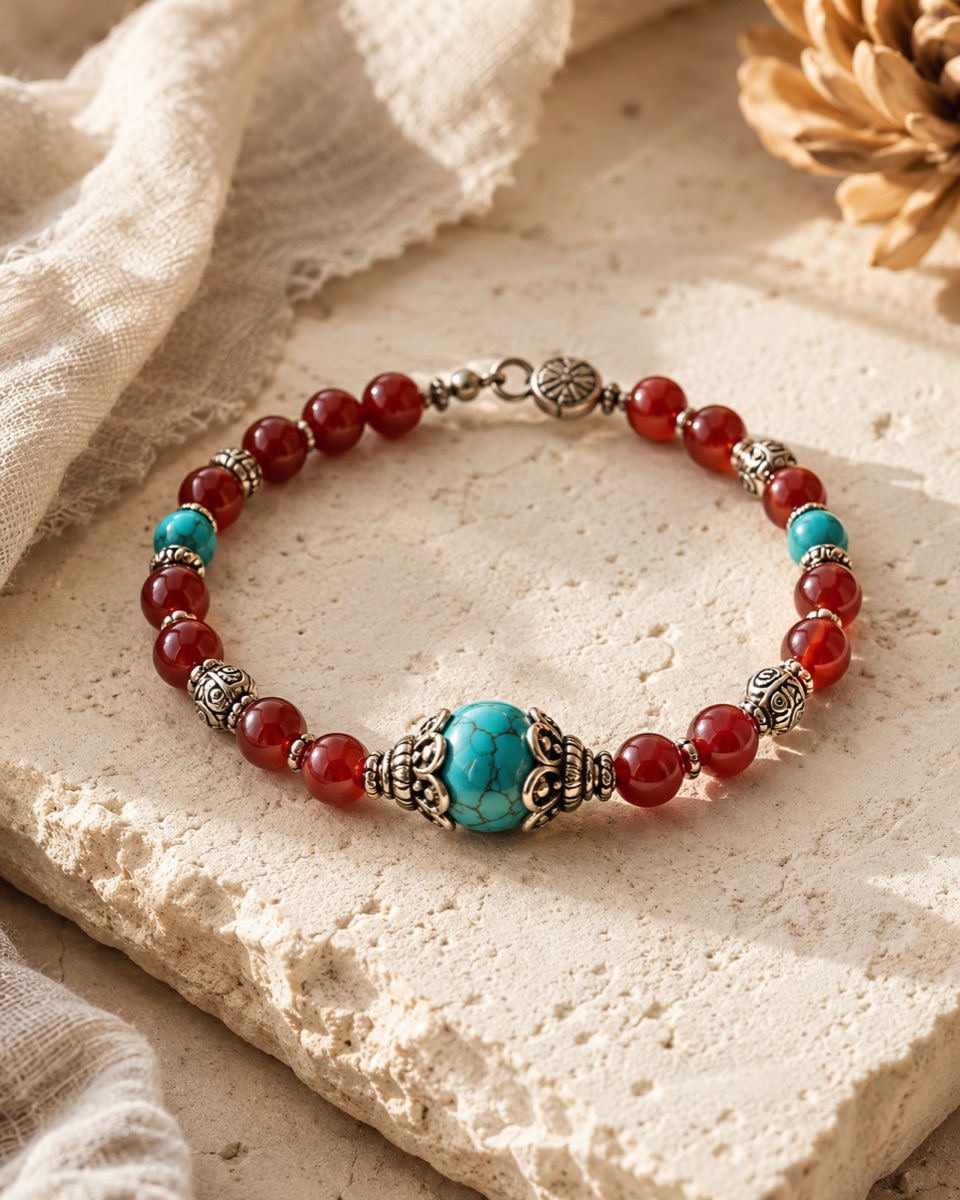
The Hamsa is traditionally made from or adorned with turquoise — a stone with its own long history of protection. The blue-green color is deeply associated with the evil eye amulet (nazar), and many Hamsa hands feature turquoise beads, inlays, or the blue color itself.
Wearing a Hamsa with turquoise combines two of the world's most powerful protection traditions in one piece. Shop our Turquoise Sky Bracelet →
Symbolism
Explore the meaning behind Tibetan jewelry symbols — the lotus, endless knot, turquoise, and Dzi beads. Learn what these sacred symbols mean and why they're worn.
Symbolism
Discover the ancient art of Miao silver filigree — a technique where silver is drawn finer than human hair. Learn the history, process, and cultural meaning of this endangered craft.
Symbolism
Discover the meaning of the endless knot — the Buddhist symbol of interconnection and infinite wisdom. Learn why it's used in jewelry and what it means for the wearer.
Loading comments...