✨
Caravan Road
Where the Caravan Meets
4 min read · June 16, 2026
Silver traveled down from the plateau. Silk traveled west from the lowlands. They met, over centuries, on the caravan roads.
There was a road, once, that ran from the plateau to the lowlands, from the desert to the sea. The Silk Road, the caravan road, the road that took centuries to build and only a few decades to forget. On it, things traveled: silk, silver, salt, tea, ideas about god, ideas about numbers, ideas about what a knot could mean.
A Tibetan trader might carry a hammered silver amulet down from Lhasa. A Miao silversmith might carry a coil of filigree wire up from the southwest. They would meet, somewhere, in a mountain pass or a river crossing, and trade — not just goods, but meanings. A prayer, a pattern, a way of fastening.
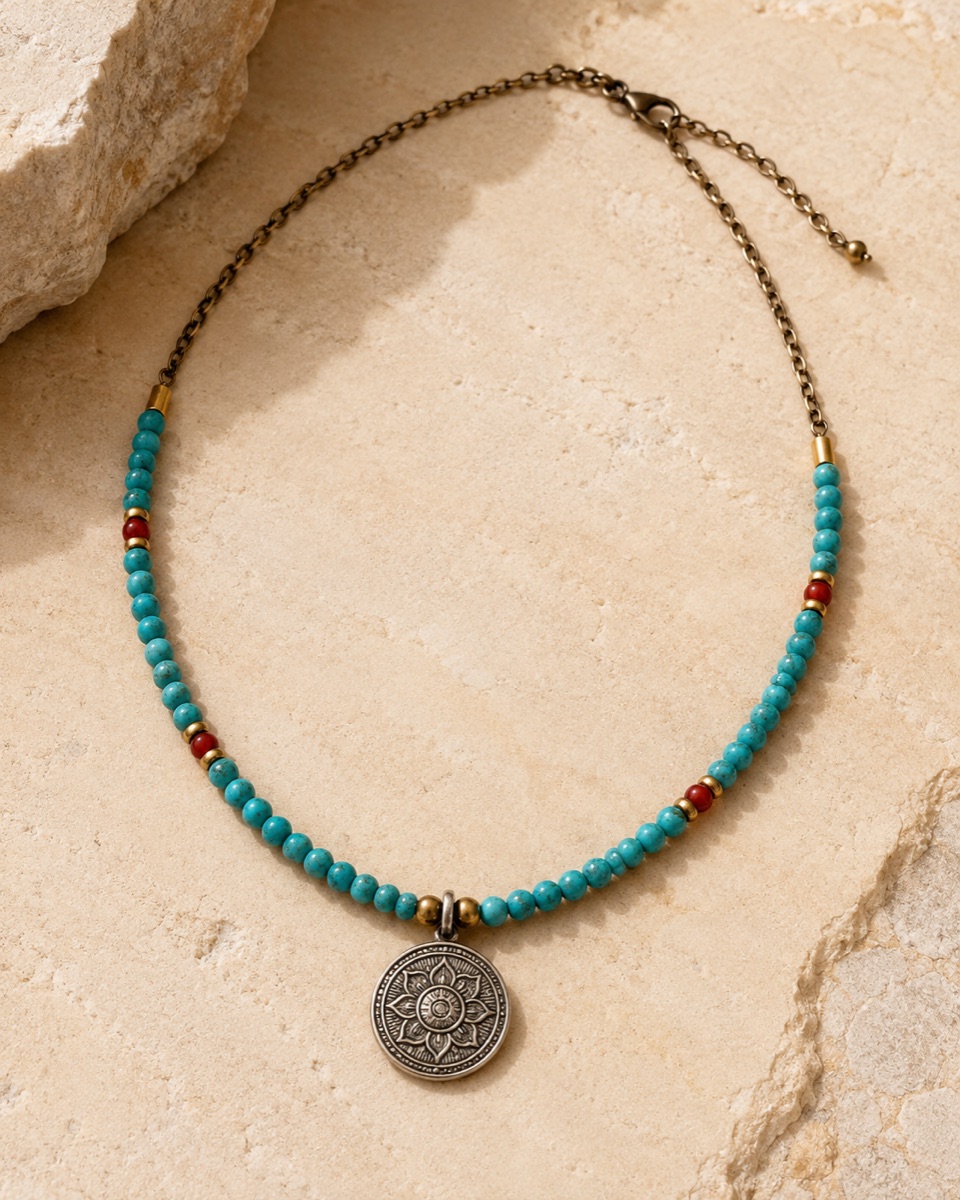
This necklace is a small piece of that meeting. Hand-hammered Tibetan silver, set with a turquoise stone, finished with a coil of Miao filigree, on a hand-woven silk cord. It is not any one tradition. It is the moment two of them shook hands — and the handshake held.
You may never ride a caravan. But every time you wear a piece that came from two places at once, you ride it a little.
Read another
All stories →Tibetan Plateau
Silver That Remembers
In Lhasa, a silversmith has chased the same lotus pattern for thirty years. He says silver holds the memory of every strike.
Mongolian Steppe
The Knot That Counts Home
Every braid a mother ties for her traveling child is a silent count of the days until return.
Miao Villages
Silver as Inheritance
For the Miao, a bride wears her entire family history around her neck — hammered, over three years, into silver.